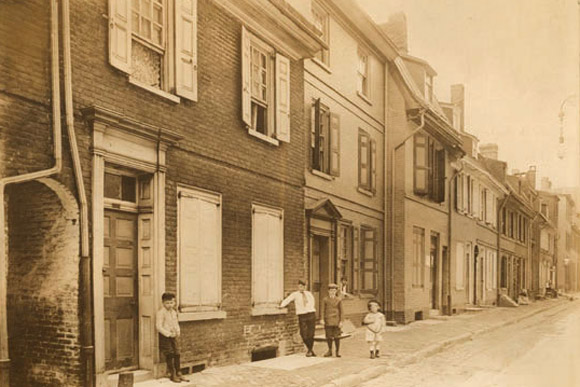
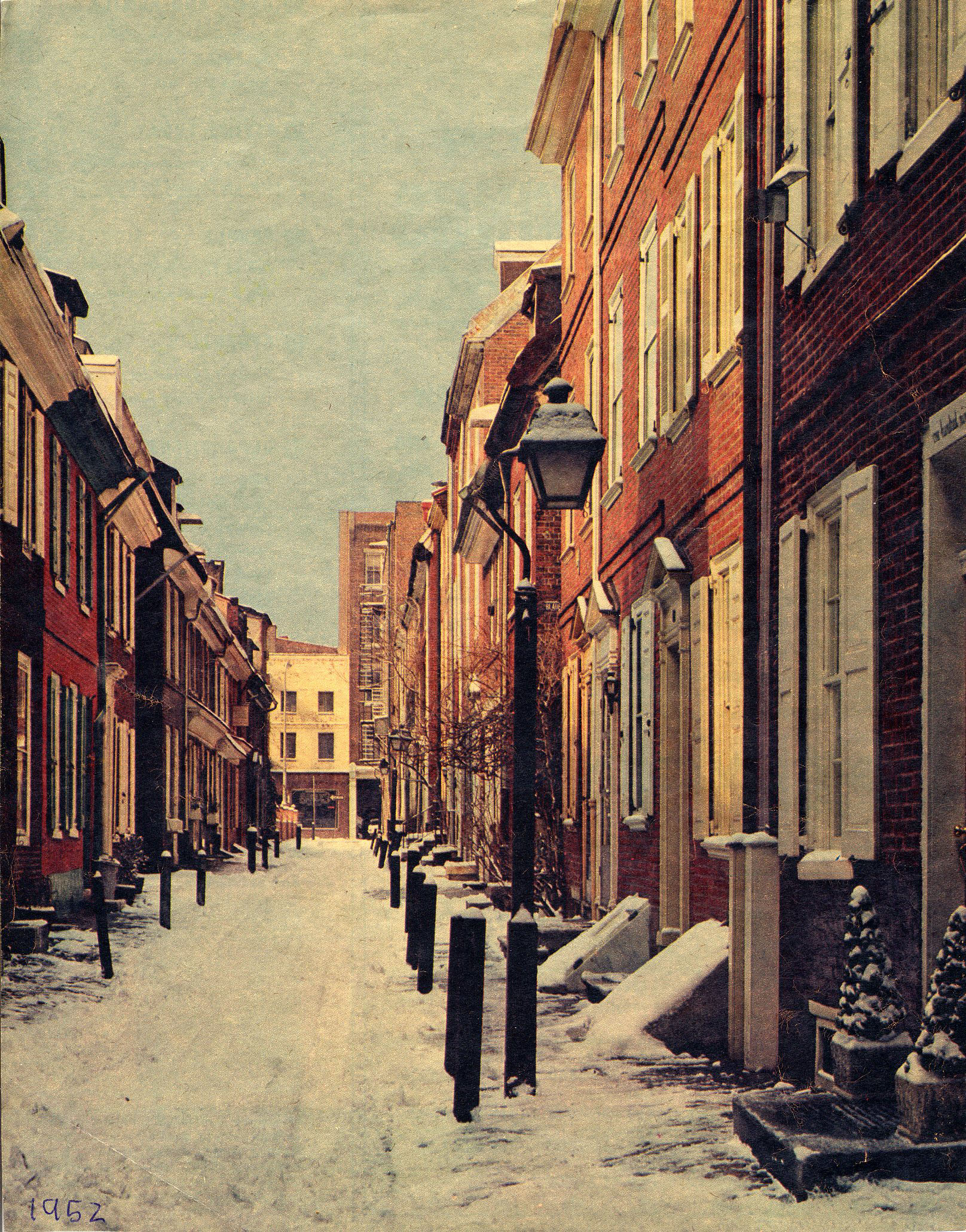
Three hundred years of history on one residential street.
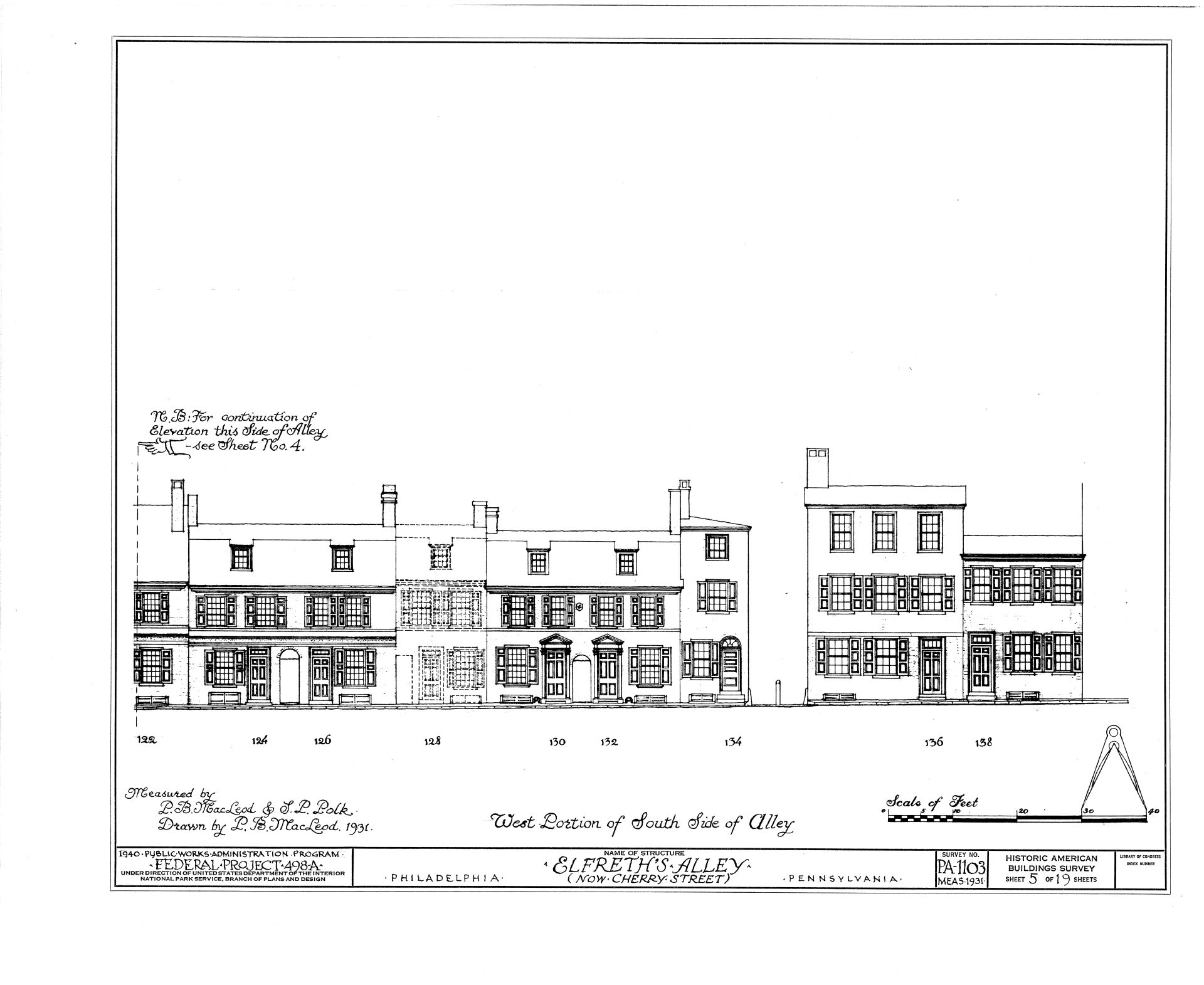
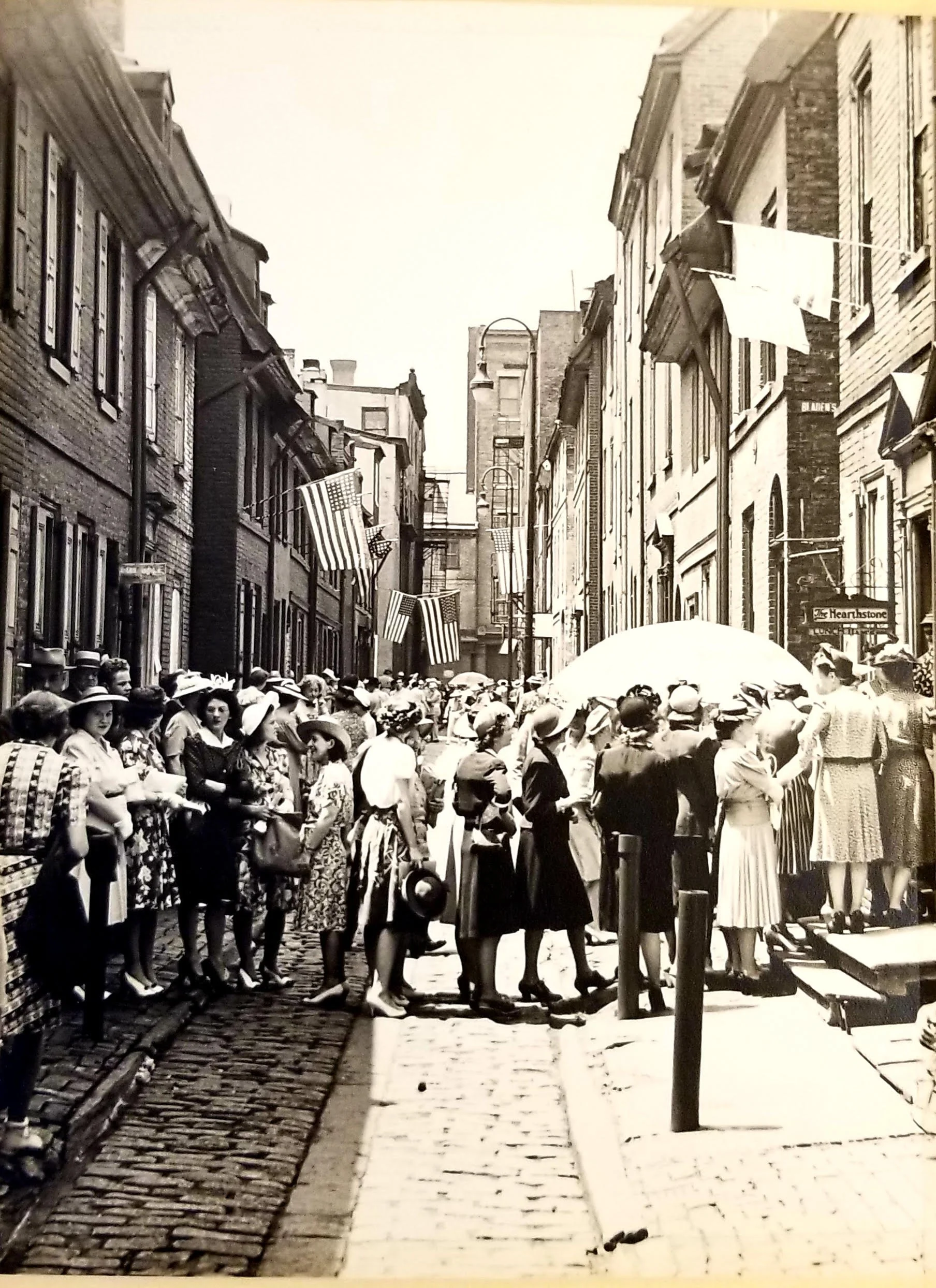
Elfreth's Alley is one of the oldest continuously inhabited residential streets in the United States. Located in Old City, Philadelphia, Elfreth's Alley dates back to 1703 and is an exceptional collection of early American structures built between 1720 and 1836. Most of the homes are privately owned residences, but #124 and #126 are the Elfreth's Alley Museum, run by the Elfreth's Alley Association. The Association was founded in 1934 to preserve and protect the Alley and tell the story of its inhabitants, who were primarily artisans and working-class laborers. The Alley receives over 300,000 annual visitors from all over the world.
VISITING ELFRETH’S ALLEY:
Elfreth’s Alley is a public street available for a stroll anytime of day. Yes, people do still live here!
The Elfreth’s Alley Museum is OPEN for the 2026 season
Museum hours are Fridays, Saturdays, and Sundays from 12pm - 4pm.
Museum Admission is $3 for Adults and $2 for Kids 7-12.
Guided Tours of Elfreth’s Alley are offered at 2:30pm on Saturdays and Sundays. This includes a 40 minute history tour along the full length of Elfreth’s Alley including Bladen’s Court with an expert guide, and entrance to our two museum houses.
Guided Tour Tickets (including museum admission) are $10 for adults, $5 for Kids 7-12.
Museum Admission and Guided Tour tickets can be purchased in person at Elfreth’s Alley Museum.
We do not offer online ticketing at this time. We happily accept Cash, Card, and Apple Pay!
An Audio Tour is available for purchase ($3) at any time on smartphones at elfrethsalley.org/audiotour.
To request a tour for a private group or school group, please use this form.
Also check out our podcast!


Check out recent posts from our Blog:

A brief overview of the Alley’s history:
18th & 19th Century
Elfreth’s Alley was not included in original plans for Philadelphia. As Philadelphia became a bustling city, artisans and merchants purchased or rented property close to the ports where goods and materials arrived. This led to overcrowding, and landowners recognized that tradesmen needed alternate routes to the river. Arthur Wells and John Gilbert opened a cart path between their properties, which stretched from Front St. to Second St., in 1703. The path later became known as Elfreth’s Alley, named after Jeremiah Elfreth, blacksmith and land developer.
20th century
The heroic efforts of residents and local historians from the 1930s to 1960s preserved the Alley as a typical colonial street, led by resident Dolly Ottey. Ottey fought to combat deterioration of the alley in the early 20th century and lead efforts to form the Elfreth’s Alley Association (EAA) in 1934. In the 1960's, the EAA secured National Historic Landmark status to ensure that Interstate 95 construction did not eliminate Elfreth’s Alley from the landscape of Old City, Philadelphia.

21st century
Today, Elfreth’s Alley is an “exceptional example of early American structures built between 1720 and 1830” according to the historic marker designated in 2016. The Elfreth’s Alley Museum (located at houses 124 and 126) celebrates the working class of America who helped build this country through sweat and commerce. The alley is still a thriving residential community which is home to artists and artisans, educators and entrepreneurs, and everything in-between.